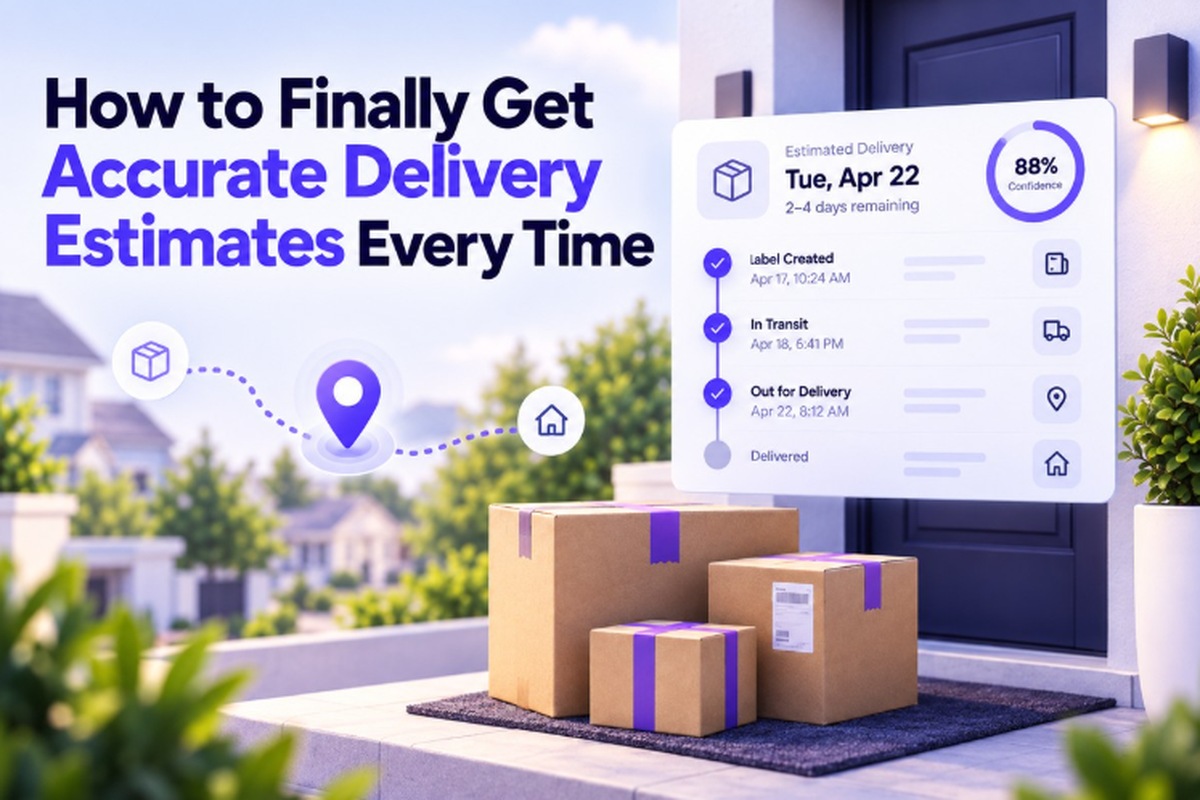
Tag: package tracking

  • Why Is My Delivery Estimate Wrong? How to Get a More Accurate Date 

    Why Is My Delivery Estimate Wrong? How to Get a More Accurate Date 

    Your delivery date has passed, changed unexpectedly, or never matched the estimate you received when you placed your order.

    If you are wondering, “why is my delivery estimate wrong,” the answer is usually not that your package is lost. A delivery estimate is a prediction based on processing time, typical transit times, carrier data, and the expected route. Those conditions can change after your package ships.

    Weather, shipping volume, customs checks, carrier handoffs, address issues, and delayed tracking scans can all affect the original estimate. As new shipment information becomes available, the expected delivery date may also change.

    This guide explains why delivery estimates can be wrong or change, how checkout estimates differ from carrier estimates, and how to use the latest tracking information to get a more current view of when your package may arrive.

    Why Is My Delivery Estimate Wrong?

    Delivery estimates are usually wrong because they rely on advance averages for transit and processing, rather than real-time conditions affecting your specific shipment.

    The three biggest causes are:

    • How the estimate was calculated initially
    • What happened after the parcel shipped
    • Whether the date came from the seller or carrier

    Sellers may use processing times and typical transit ranges, while carriers update estimates using actual scans and route conditions. Unexpected delays can make either date change or become inaccurate.

    The rest of this guide breaks down each cause in order.

    How Are Delivery Estimates Actually Calculated?

    A delivery estimate is based on a simple formula, not a live prediction. It usually starts with the ship date, processing time, and expected transit time for your route.

    1. Carrier Transit Times and Service Levels

    Carriers look at how long similar packages usually take on a particular route. They use those past delivery times to set an expected window for each shipping service.

    For example, economy shipping usually takes longer than express shipping. The estimate also depends on the carrier and service your package is expected to follow. 

    Carriers generally consider three things:

    • Distance and handoffs: How far the package travels and how many times it changes hands.
    • Past delivery times: How long similar packages usually take on that route.
    • Shipping service: Whether you selected economy, standard, express, or another option.

    This gives the carrier a reasonable starting point, but it is not a promise.

    That is why two packages shipped on the same day can still have different delivery estimates. Their routes, destinations, or shipping services may differ.

    1. Real-World Conditions That Shift the Date

    The original estimate is based on what usually happens. Your package, however, may face conditions that were not expected when that estimate was created.

    For example:

    • Bad weather can slow flights, trucks, or local deliveries.
    • Heavy shipping volume during holidays or major sales can create backlogs.
    • Address problems can make it harder to route or deliver the package.
    • Extra carrier handoffs can add time, especially on international shipments.

    When something like this happens, your package can take longer than the original estimate suggested.

    The problem is that the first estimate may not change immediately when these delays occur.

    Use the Delivery Date Calculator to estimate a typical arrival date from the ship date, transit time, weekends, and holidays. 

    So the date you see can look wrong, even though the package is simply taking longer than expected.

    Why Does My Estimated Delivery Date Keep Changing?

    A changing delivery estimate usually means the system is updating itself with newer information, not that something has failed.

    Some carriers and marketplaces update the date when new tracking scans arrive. A delay at one checkpoint can push the expected delivery date later.

    Three common reasons the date changes:

    • Sorting facility delay: A missed or delayed scan can make the package appear behind schedule.
    • Customs hold: International shipments may wait while customs checks or processes the package.
    • Carrier handoff: A different carrier may take over the final delivery leg, changing the expected timing.

    What this means for you: The date may move again as the tracking system receives more information. That can feel frustrating, but checking the meaning of each tracking status can help you understand what the latest update actually indicates. 

    A later date is frustrating, but it usually means the system is actively updating rather than ignoring a real delay.

    What Causes the Biggest Delivery Delays?

    A small group of recurring problems causes many delivery delays across shipping networks worldwide.

    CauseWhy it delays delivery
    Weather disruptionSevere weather can slow flights, road transport, sorting, and local delivery operations.
    Peak season / high volumeHolidays and major sales events can create heavier workloads and processing backlogs.
    Customs clearanceInternational shipments may wait while customs checks documents, contents, or duties.
    Address or geocoding errorsIncorrect address details can make routing difficult and delay the delivery attempt.
    Carrier handoff delaysInternational or last-mile handoffs can add waiting time between different delivery networks.
    Incomplete or missing initial scanMissing scans can delay tracking updates and make the shipment appear stuck or behind schedule.

    International shipments face several of these causes at once, especially customs checks and multiple carrier handoffs.

    Most of these problems appear in the tracking timeline as status changes before you notice the delay yourself.

    Is the Checkout Delivery Estimate the Same as the Carrier’s Estimate?

    No, these are often two different numbers, calculated by different systems for different purposes.

    The checkout estimate is usually created when you order, using the seller’s processing time and typical carrier transit time. Once the parcel ships, the carrier can use actual scans to update its own estimate.

    Checkout estimateCarrier tracking estimate
    When: Set when you place the order.When: Updated after the parcel enters the carrier network.
    Based on: Seller processing time plus typical carrier transit time.Based on: Actual tracking scans and the parcel’s movement through the network.
    Purpose: Gives you an expected delivery date before the shipment starts moving.Purpose: Shows the expected arrival based on what is happening during transit.

    The practical difference: After shipping begins, the carrier’s tracking estimate is generally more current because it uses newer shipment information.

    What a good tracking tool adds: It can surface a continuously updated, confidence-scored estimate based on the latest available tracking information.

     How Can You Get a More Accurate Delivery Prediction?

    The most reliable prediction comes from an estimate updated using actual parcel scans, rather than the date set during checkout.

    1. Check the Parcel After It Ships

    Once the parcel is moving, use its actual tracking activity instead of relying on the original order date.

    Look for: The latest carrier scan and the delivery estimate based on that shipment activity.

    1. Prefer a Delivery Window Over One Fixed Date

    A delivery window shows that the prediction can change as the shipment moves through the network.

    Look for: An arrival range and a confidence score, rather than treating one date as guaranteed.

    1. Read the Status Before the Date

    Tracking statuses can reveal problems before the estimated delivery date visibly changes.

    Watch for: Customs holds, exceptions, missed scans, or other status changes that could affect arrival.

    What Gives You a More Current Prediction?

    A tracking tool can pull the latest scans from 3,000+ carriers and combine them with carrier history. It can then show a predicted arrival window with a confidence score, giving you a current estimate based on actual shipment information.

    Check your shipment now: Track your package to see its latest tracking status and live delivery estimate.

    When Should You Actually Worry About a Late Delivery?

    A delivery estimate passing by a few days is usually normal, but certain signs mean it is worth taking action.

    Usually Normal

    A late date alone does not necessarily mean something is wrong with your package. Estimates can change when shipments encounter delays that were not included in the original prediction.

    Signs Worth Checking

    Look more closely when you see:

    • “Exception” or “Delivery Attempt Failed”: These statuses indicate a specific delivery problem, rather than simply an old estimated date.
    • No scan movement for several days: The package has gone several days beyond the estimate without any new tracking activity.
    • Repeated estimate changes: The delivery date keeps moving, but no new tracking activity appears between those changes.

    What To Do Next

    If any of these signs appear, check the latest tracking status before assuming the package is lost or seriously delayed. At that point, contact the seller or carrier directly with your tracking number, since the estimate alone cannot resolve the problem.

    Not sure what that tracking status means? Use the Tracking Status Decoder to turn confusing carrier updates into plain English.

    Get a More Current Delivery Estimate with ParcelTracking
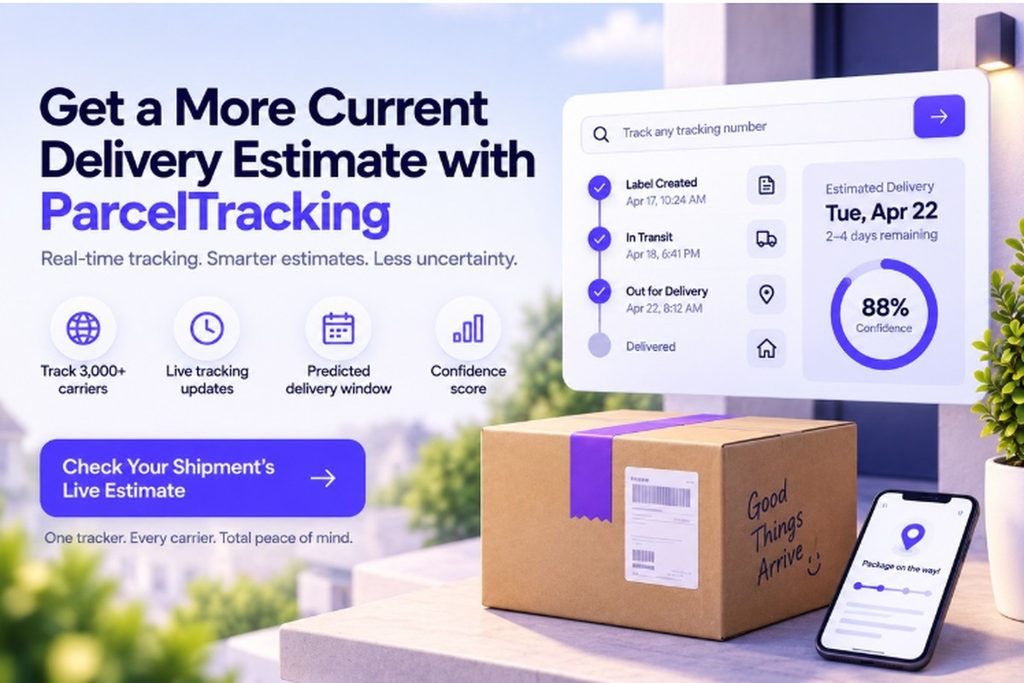
    Get a More Current Delivery Estimate with ParcelTracking

    Your checkout date is only a starting point. Once your parcel is moving, newer tracking information can give you a clearer picture.

    With ParcelTracking, you can:

    • Track 3,000+ carriers in one place
    • Follow the latest tracking scans as your parcel moves
    • See a predicted arrival window instead of relying on one fixed date
    • Check a confidence score based on carrier history and the latest scan

    Stop relying on an outdated checkout date.

    Check your shipment’s live estimate →

    Final Thoughts

    A wrong delivery estimate is usually explainable, not a broken system, because averages meet real-world shipping conditions. The original date may not reflect delays, route changes, customs holds, or other events affecting the parcel after shipment.

    Once your parcel ships, check the estimate based on its actual scan history rather than relying on its original checkout date. New tracking scans provide more current information about where the parcel is and how its journey is progressing.

    When you want a current view of your shipment, check your shipment’s live estimate using its tracking number.

    Frequently Asked Questions

    1. Why does my estimated delivery date keep changing?

    Your estimated delivery date usually changes when new tracking information causes the carrier or marketplace to update its prediction.

    1. Is it normal for a package to arrive after the estimated delivery date?

    Yes, packages can arrive after their estimated delivery dates when unexpected delays affect processing, transit, or final delivery.

    1. Does the delivery estimate include the seller’s processing time?

    The delivery estimate may include the seller’s processing time, depending on how the seller or marketplace calculates its estimated arrival date.

    1. Why do two packages with the same shipping method show different estimates?

    Two packages can have different estimates because their routes, destinations, processing times, or expected carrier handling may differ.

    1. What causes shipping delays that affect delivery estimates?

    Shipping delays commonly result from weather, heavy shipping volume, customs clearance, address problems, or additional carrier handoffs.

    1. How accurate are carrier delivery estimates?

    Carrier estimates become more current as new scans arrive, and ParcelTracking can use 3,000+ carriers, latest scans, carrier history, and confidence scores.

    1. Does weather really affect delivery estimates?

    Yes, severe weather can disrupt flights, road transport, sorting operations, and local deliveries, causing estimated arrival dates to change.

    1. What should I do if my delivery estimate has passed?

    Check the latest tracking status first, then contact the seller or carrier with your tracking number if delays continue.
  • How Package Tracking Actually Works, From Scan to Doorstep

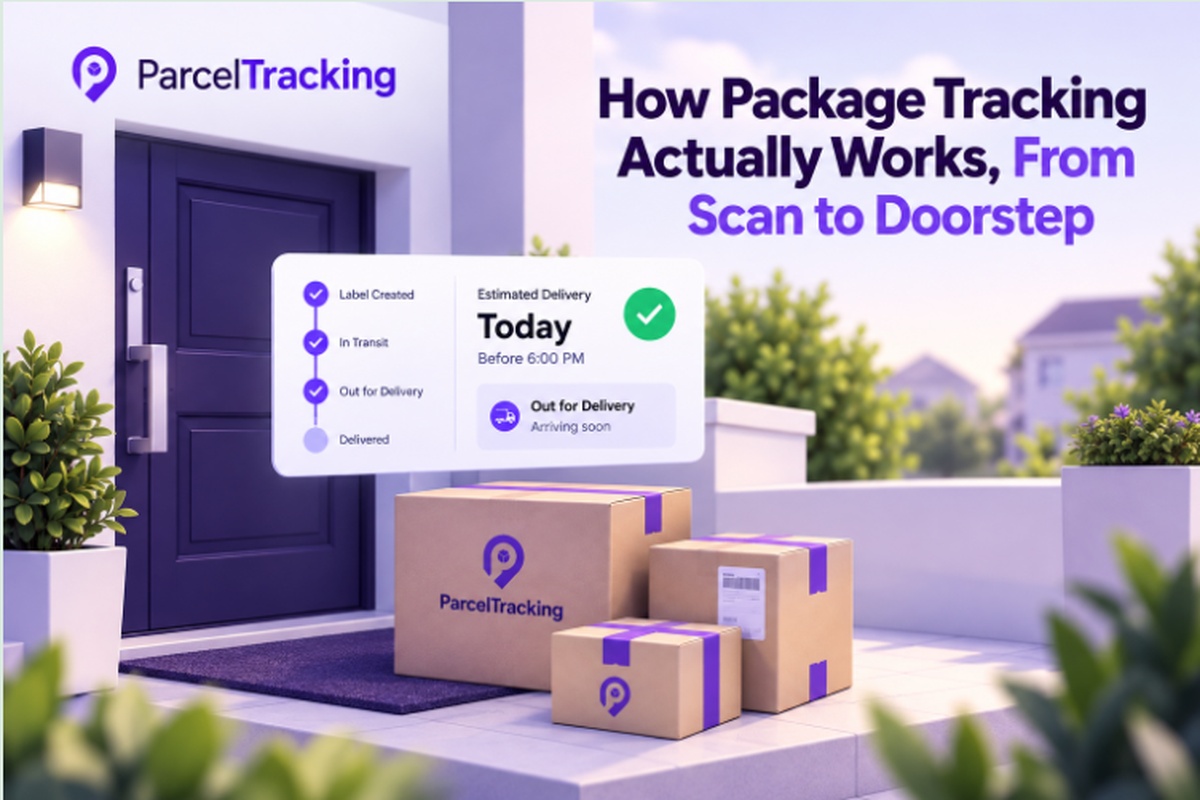
    How Package Tracking Actually Works, From Scan to Doorstep

    Package tracking works by collecting scans and delivery updates as your parcel moves through different stops. But how does it work when your tracking number has not changed in three days?

    You see “in transit” again, with no useful clue about where the package actually is. Maybe the last scan was yesterday, or worse, several days ago.

    This guide shows what happens from the first label scan to the final delivery. You’ll learn what common tracking statuses really mean, including why some updates arrive late. You’ll also see how one live timeline can bring carrier updates together, instead of making you check different websites.

    First, let’s look at what your tracking updates are actually telling you.

    What Is Package Tracking, Exactly?

    Package tracking is the process of recording a parcel’s progress so you can see its latest location, status, delivery estimate, and carrier movement.

    It gives you visibility after a shipment leaves the sender and moves through sorting facilities, transport hubs, and delivery routes. Instead of wondering where your parcel is, you can check its latest recorded progress.

    In practice, package tracking tells you:

    • Latest location or last recorded scan point
    • Current delivery status
    • Estimated delivery window
    • Carrier handling the current leg

    These details come from tracking events recorded as the parcel moves through the delivery network.

    How Does Package Tracking Work Behind the Scenes?

    Package tracking starts when a carrier assigns a tracking number and shipping label. Each scan adds a new event, which reaches a tracking system and appears online.

    1. The Shipping Label and Tracking Number

    A tracking number gives your parcel a unique identity throughout its journey.

    The barcode or QR code lets scanners identify the shipment quickly at handling points. The label also carries the routing information needed to move it correctly.

    Think of the label as a passport for the parcel.

    A typical shipping label shows:

    • Tracking number: Unique shipment identifier
    • Routing details: Origin and destination
    • Service level: Shipping type or delivery service
    1. Scan Points Along the Route

    A scan point is where the carrier records a parcel event during its journey.

    A typical journey looks like this:

    1. Pickup
    The courier collects the parcel and records its first movement.

    2. Origin sorting facility
    The parcel enters the carrier’s network and gets sorted for transport.

    3. Transit hub
    The parcel moves through a regional or long-distance transport hub.

    4. Destination facility
    The parcel reaches a facility serving the delivery area.

    5. Out for delivery
    The parcel is assigned for final delivery to the recipient.

    Keep in mind: Scan frequency varies by carrier, route, facility, and service tier.

    1. How Scan Data Reaches Your Screen?

    The physical scan creates an event in the carrier’s tracking system.

    The process is usually:

    Scan → Carrier system → Website or app → Tracking update

    A carrier can display its own tracking data directly on its website or app. Third-party tracking tools can pull the same information through an API or other data feed.

    Why do updates appear late?

    There can be a short delay between the physical scan and the update appearing on your screen.

    That means your parcel can already be moving while the tracking page still shows the previous event.

    What Do the Different Tracking Statuses Actually Mean?

    Carriers use a small set of recurring tracking statuses, although the exact wording can differ slightly between them.

    StatusWhat it actually means
    Label Created / Info ReceivedThe shipment details exist, but the carrier may not have received the parcel yet.
    Picked UpThe carrier has collected the parcel and recorded its first physical movement.
    In TransitThe parcel is moving through the carrier’s network toward its destination.
    Arrived at FacilityThe parcel has reached a sorting or delivery facility for its next step.
    Out for DeliveryThe parcel has left the local facility and is with the courier for delivery.
    DeliveredThe carrier has recorded the parcel as delivered to the destination.
    Exception / DelaySomething has interrupted normal movement, such as a routing, weather, customs, or handling issue.
    • Exact status wording varies by carrier, but the underlying meaning usually stays consistent across tracking systems.
      • Exception is the status worth paying attention to because it signals an actual problem rather than normal movement.

    Confused by a status message? See what your tracking status actually means 

    Is Package Tracking Really “Live,” or Just Scan-Based?

    Most package tracking is not continuously live. It is scan-based, meaning updates appear when a physical scan records a new event.

    Your tracking page usually shows recorded events, not your parcel’s continuous location. Between two scans, the parcel can keep moving while the screen shows the previous event.

    Scan-Based vs. Live/GPS-Based Tracking

    Scan-based trackingLive/GPS-based tracking
    Updates when the parcel reaches a checkpointUpdates the delivery vehicle’s position continuously
    May look unchanged for hours between scansShows frequent position changes during tracked movement
    Common across the wider shipment journeyUsed mainly for final-mile delivery and courier dispatch

    Why can a parcel look stuck?

    • The parcel may already be moving even when the tracking page shows no new event.
    • A long road or line-haul journey can produce no scan until the parcel reaches its next facility. This is why a stale status does not automatically mean the shipment is lost.
      • For longer gaps and missing updates, see the separate guide on tracking numbers that stop updating.
    • A unified tracking view brings the freshest available scan from each carrier and shipment leg into one timeline.
      • New carrier data appears as soon as it reaches the tracking system.
    • It can also show a predicted arrival window with a confidence score, rather than one static delivery estimate.

    Why Does Tracking Information Sometimes Lag or Go Quiet?

    Tracking gaps are almost always caused by time between physical scans, not a lost or mishandled parcel.

    The parcel can keep moving while your tracking page waits for the next recorded event.

    Common reasons include:

    • Long-haul transit between distant facilities
    • Handoff between carriers during international or last-mile delivery
    • Customs clearance before the next movement
    • High-volume periods creating scan backlogs

    These gaps are especially common when shipments cross multiple networks or travel longer distances between facilities.

    A silent tracking page also differs from an explicit delay status, so the wording matters.

    Note: As a rule of thumb, wait 24 to 48 hours before assuming something is genuinely wrong. then check the exact status wording because “Exception” signals a problem, unlike simple silence.

    How Do Multiple Carriers Share One Tracking Number?

    A parcel can move through several carrier networks, especially internationally, and its tracking number may change between systems.

    1. One parcel, several carrier systems

    The origin carrier may hand the parcel to a line-haul or customs partner. That partner can then pass it to a destination carrier for last-mile delivery.

    The handoff usually looks like:

    Origin carrier → Line-haul or customs partner → Destination carrier

    Each carrier may create its own internal reference number while handling the same physical parcel. Systems then match those records so the shipment can continue through the journey.

    1. A simple three-leg example

    1. Origin carrier
    Accepts the parcel and records its initial tracking events.

    2. International transport partner
    Moves the parcel across borders and links the shipment record.

    3. Destination carrier
    Receives the parcel and handles final-mile delivery.

    3. Why can one number stop working temporarily?

    A carrier’s website may only recognize tracking numbers from its own network. Once the parcel changes hands, the original number may not appear there.

    That is why one carrier can show “not found” even while the parcel is genuinely moving through another network.

    Not sure which carrier owns the number? Identify the carrier from your tracking number before you start tracking. 

    What Technology Powers Modern Package Tracking?

    Modern package tracking relies on barcode and QR scans, carrier databases, APIs, data feeds, and GPS for some final-mile vehicles.

    These technologies work together to turn physical package movements into tracking events you can see online. Each layer handles a different part of identifying, recording, transferring, or displaying shipment information.

    The main technologies behind package tracking are:

    • Barcodes and QR codes: They encode the tracking number for fast, accurate scanning at each checkpoint.
    • Carrier databases: They store every scan event linked to that tracking number as a timestamped history.
    • APIs and data feeds: They let third-party tools automatically retrieve tracking events from multiple carrier systems.
    • GPS and telematics: Some couriers use them during final-mile delivery to show a moving vehicle position.

    GPS-based tracking usually covers the delivery vehicle rather than the parcel throughout its entire journey.

    Why does this matter when you track across carriers?

    A multi-carrier tracking tool can pull data from many feeds at once. It then normalizes different status terms, so “In Transit” has a consistent meaning across carriers.

    How Can You Track a Package Without Checking Five Different Websites?

    Instead of checking each carrier separately, a multi-carrier tracker brings every parcel leg into one place automatically.

    How does the tracking workflow work?

    1. Paste your tracking number
      You enter the tracking number you already received from the sender or retailer.
    2. The carrier is detected automatically
      The tracker identifies the carrier from the number format, so you do not choose one manually.
    3. Tracking data is gathered
      The system pulls available tracking events from the carrier handling your shipment.
    4. Updates appear in one timeline
      Different carrier events are brought together into a single running shipment history.
    5. Your arrival estimate is updated
      The tracker provides a predicted delivery window with a confidence score.

    What does this solve?

    • Multiple carriers: Follow one parcel across every carrier involved.
    • Carrier selection: Paste the number without searching through carrier lists.
    • Unclear ETAs: See a predicted arrival window with a confidence score.

    You do not need to create an account or select the carrier to start tracking. Just paste your tracking number and view the available shipment updates.

    Ready to check your shipment? Track your package using the tracking number you already have.

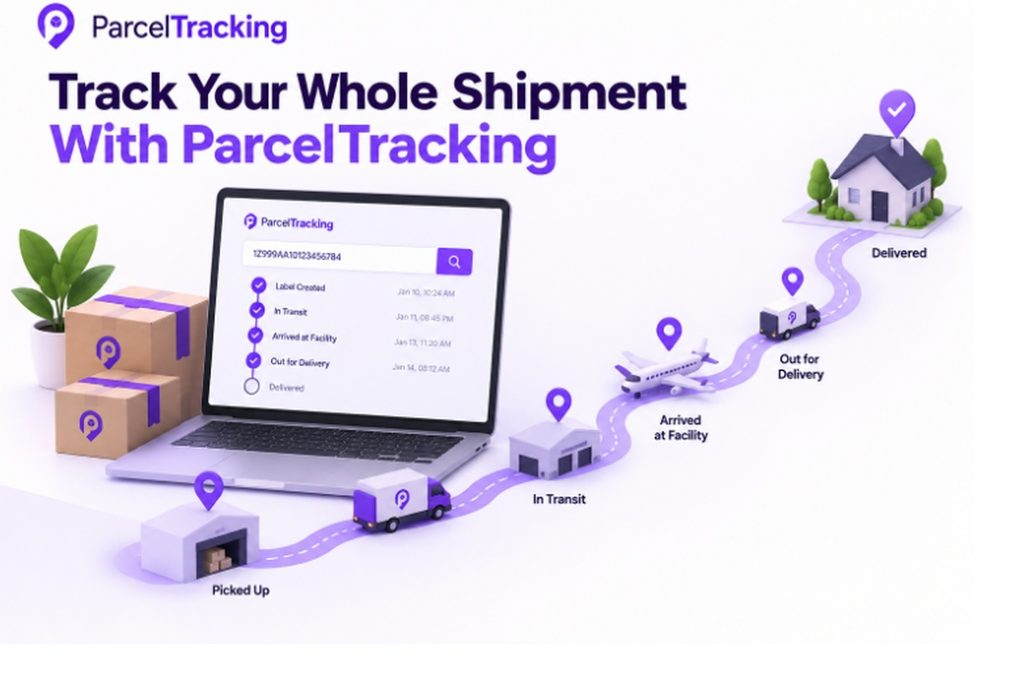
    Track Your Whole Shipment With ParcelTracking 

    Shipping label with tracking number barcode and routing details

    ParcelTracking brings tracking updates from different carriers into one timeline, so you can follow the journey without switching sites.

    It helps when you need to:

    • Track across carriers: Follow a parcel when the route changes hands.
    • Identify the carrier: Paste the number and let the tracker detect its carrier automatically.
    • Understand confusing statuses: Use the tracking status decoder for plain-English explanations.
    • Check possible customs delays: Use the customs delay checker when international tracking goes quiet.

    How it works:
    Paste your tracking number → Carrier detected → Updates gathered → One timeline

    You can start tracking without creating an account or selecting a carrier first.

    Track your package now →

    Final Thoughts

    Package tracking becomes easier to understand once you know updates reflect recorded events, not constant movement. A unified timeline gives you a clearer view when those events come from different carriers and shipment legs.

    Instead of opening several carrier websites, start with the tracking number you already have. Paste it into one tracker and let the carrier be identified automatically. Then follow the shipment as new tracking events appear across its journey.

    You can also see a predicted arrival window with a confidence score, giving more context than one fixed date. There is no need to figure out which carrier currently handles the parcel before tracking it.

    Track your package now and see the latest available journey updates in one place.

    Frequently Asked Questions

    1. What does “in transit” mean on a tracking number?

    “In transit” means the carrier has recorded your package as moving through its network toward the destination.

    1. How accurate is package tracking?

    Package tracking accurately reflects recorded carrier events, while delivery estimates can change because conditions may affect the shipment.

    1. Why does my tracking status not update right away?

    Tracking may remain unchanged because the package has not reached another scan point or the latest event has not appeared online.

    1. How long does it take for tracking to update after shipping?

    Tracking usually updates after the carrier receives and scans the package, but timing varies by carrier, service, and route.

    1. Can you track a package without a tracking number?

    You generally need a tracking number or another shipment identifier to retrieve a package’s tracking information.

    1. What is the difference between a tracking number and a reference number?

    A tracking number identifies a shipment for tracking, while a reference number usually identifies an order, invoice, or internal shipment record.

    1. Do all carriers use the same tracking technology?

    Carriers use different systems, although many rely on barcode scanning, electronic records, APIs, data feeds, and GPS for selected operations.

    1. What does “out for delivery” mean?

    “Out for delivery” means the package has entered its final delivery stage and is typically with the courier.